
“You Are Here”
January 23, 2026 – December 31, 2026
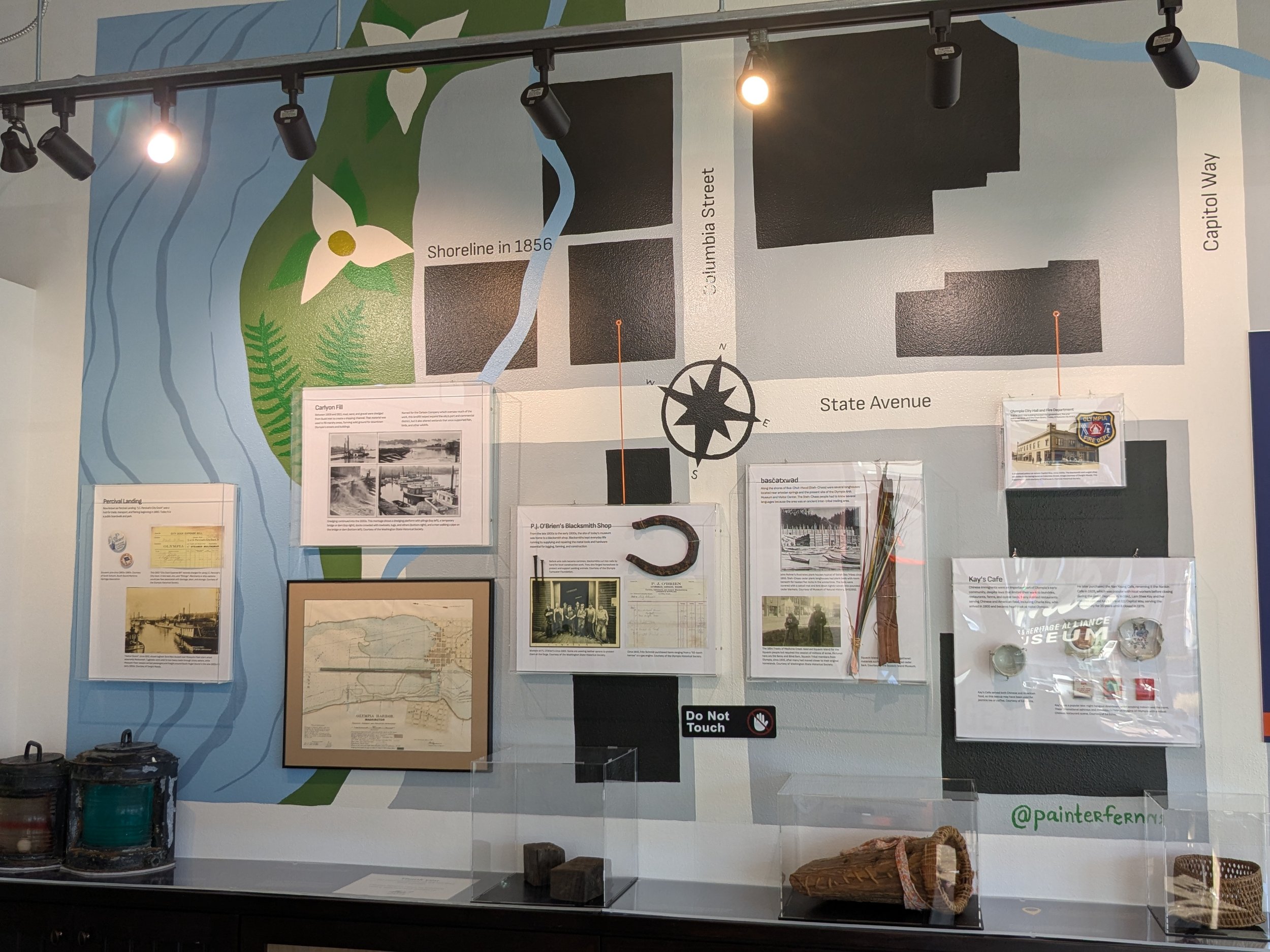
You Are Here flanks the Lobby Gallery with hand-painted maps by local muralist Fern Tallos and displays exploring Olympia at two scales: From the history at the intersection of State Avenue and Columbia Street to the broader stories of the South Puget Sound which have shaped Olympia over time.
you are here: At a crossroads in olympia
Olympia is a crossroads where people meet while traveling, where goods are traded, news and stories are shared, skills are exchanged, and new connections and ideas are developed. Explore the histories and cultures of the immediate neighborhood of the Olympia AHA Museum, the intersection of State Avenue and Columbia Street:
Squaxin Island Tribe: Since time immemorial, Native people have lived in and traveled through this area. Amongst the Puget Sound, Squaxin sites were connection points between coastal and inland communities.
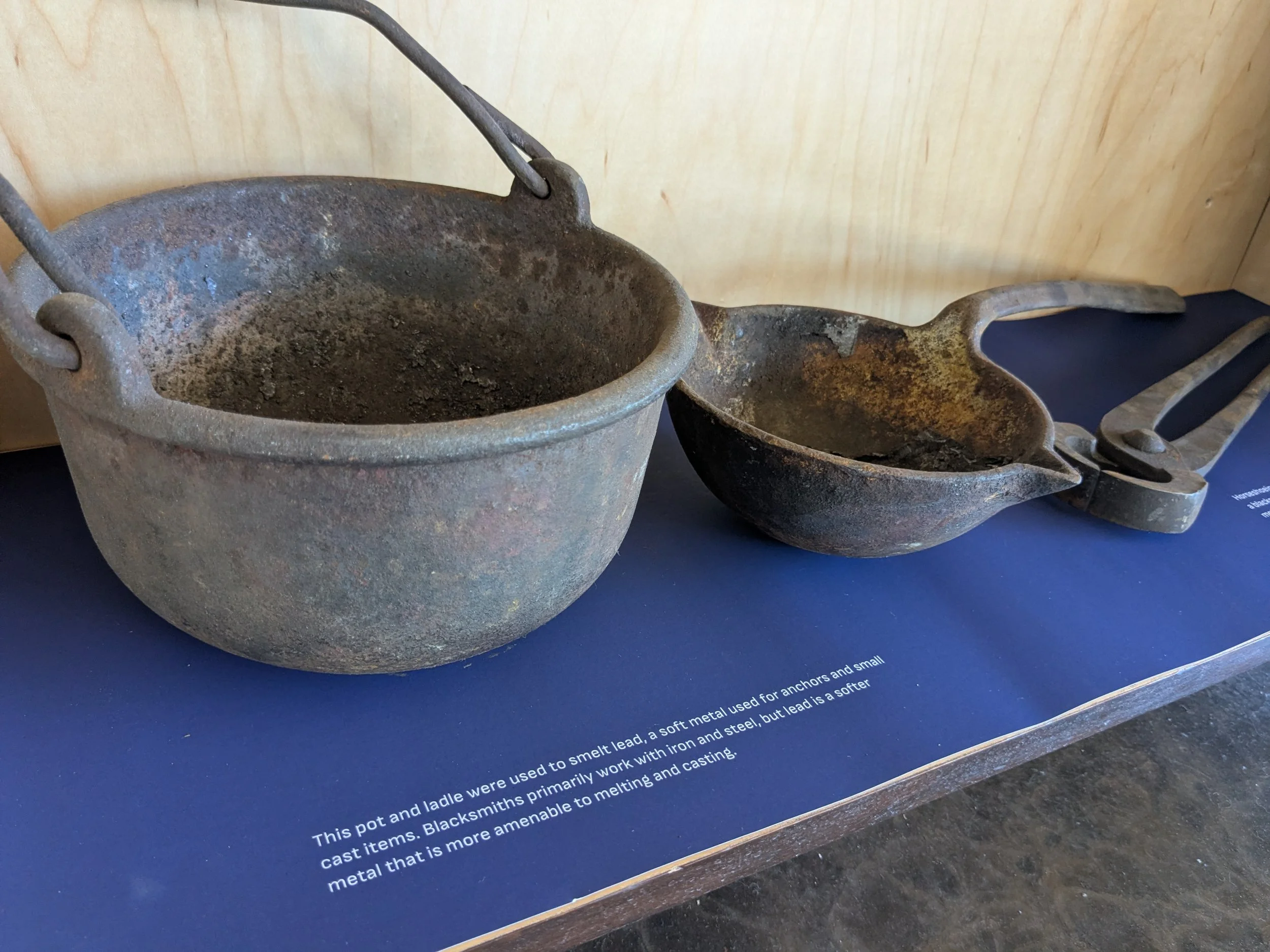
Industrial Workers: From the 1800s, blacksmiths, loggers, and other industrial workers kept people and goods in transit by forging tools and preparing materials for distribution
Countercultures: The Riot Grrrl movement and Evergreen State College have drawn people from across the country, fostering music, activism, and creative collaborations of all kinds.
Percival Landing: Since 1860, Olympia’s docks have hosted travelers and trade, carrying people across South Puget Sound and moving goods and materials.
State Capital: Since 1853, the State Capitol has drawn people to Olympia for government, civic events, and protests, making the city a crossroads of ideas and activity.
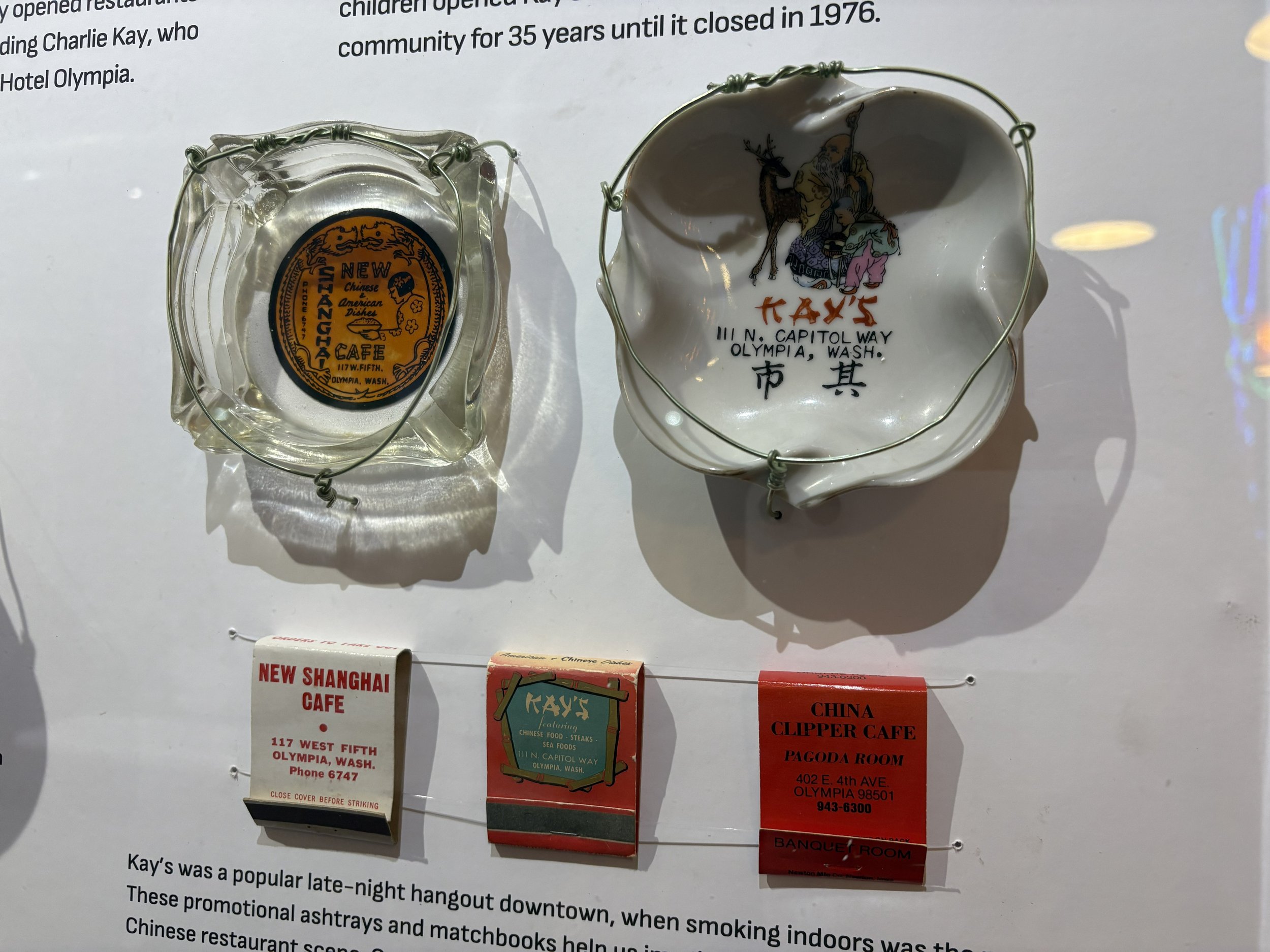
Artifacts from Kay’s Cafe, P. J. O'Brien's Blacksmith Shop, the Squaxin Island Tribe, and historic Olympia Fire Department and City Hall.
you are here: in a place shaped by the puget sound
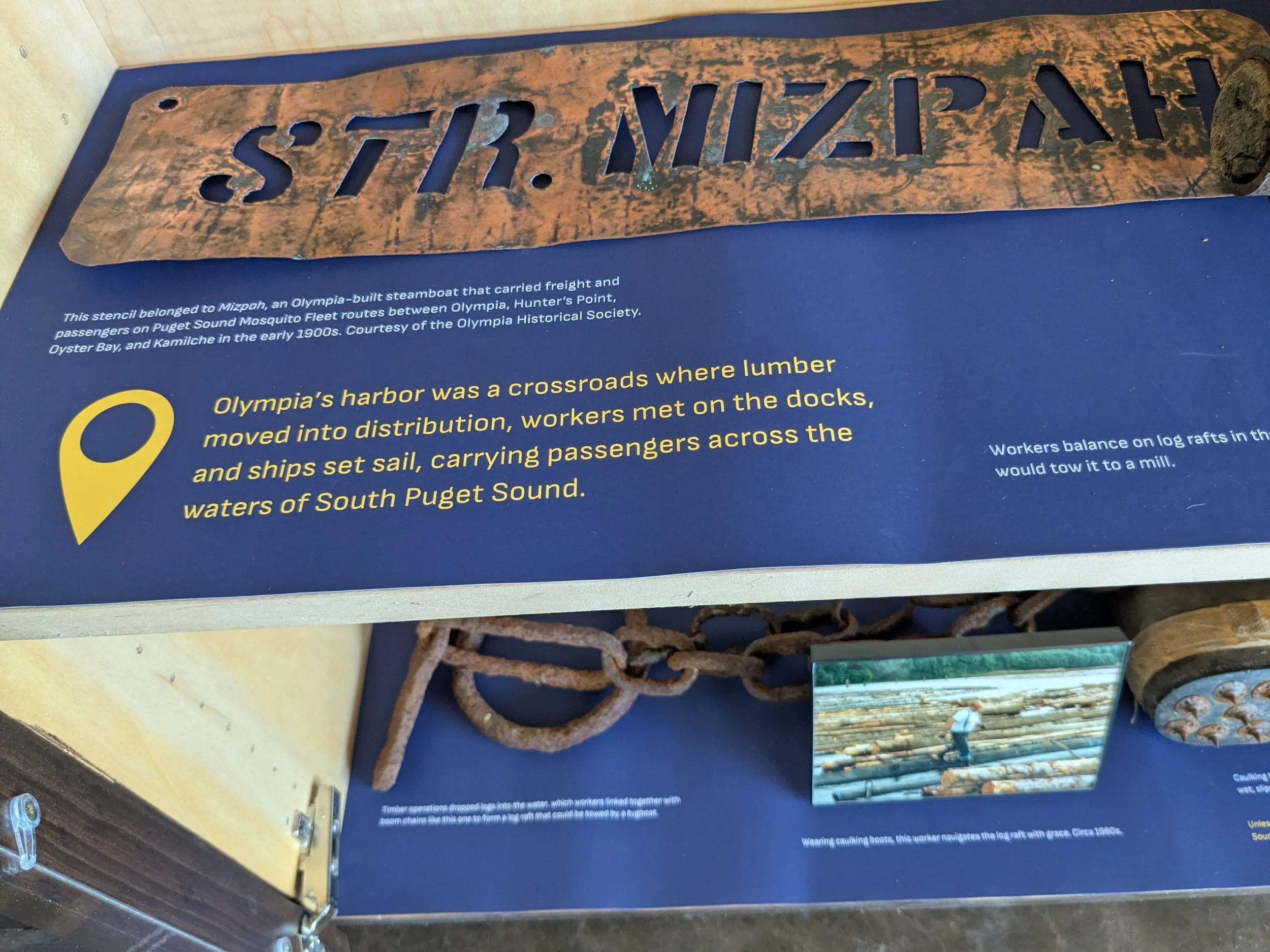
The tides and waves of the Puget Sound shape Olympia’s shorelines. These waters have carried canoes and tugboats, raised salmon and oysters, and floated log rafts to mills, all contributing to Olympia’s unique cultures and history. Explore the communities, landmarks, and cultures shaped and connected by the waterways of the South Puget Sound.
Travel by Canoe: Since time immemorial, Native people have canoed long distances to reach the South Puget Sound, where overland trails and portages connected travelers to the Chehalis River, inland communities, and the coast.
Percival Landing: Opening in 1860, Olympia’s docks provided safe landings for travel and trade across South Puget Sound.
State Capitol: Olympia was chosen as the capital in 1853 for its central location and access by water, which connected it to communities across the Puget Sound.
Olympia Oysters: The waters of the Puget Sound supported native Olympia oysters, a vital food and trade resource, with commercial production by settlers beginning in the 1850s.
Carlyon Fill: Dredging in Budd Inlet used the water itself to reshape Olympia, transformed tidal flats into new land and permanently changing how the city met the water.
Artifacts from the Squaxin Island Tribe, the Riot Grrrl Movement, The Bigelow House, The Evergreen State College, and the Olympia Oyster Company.
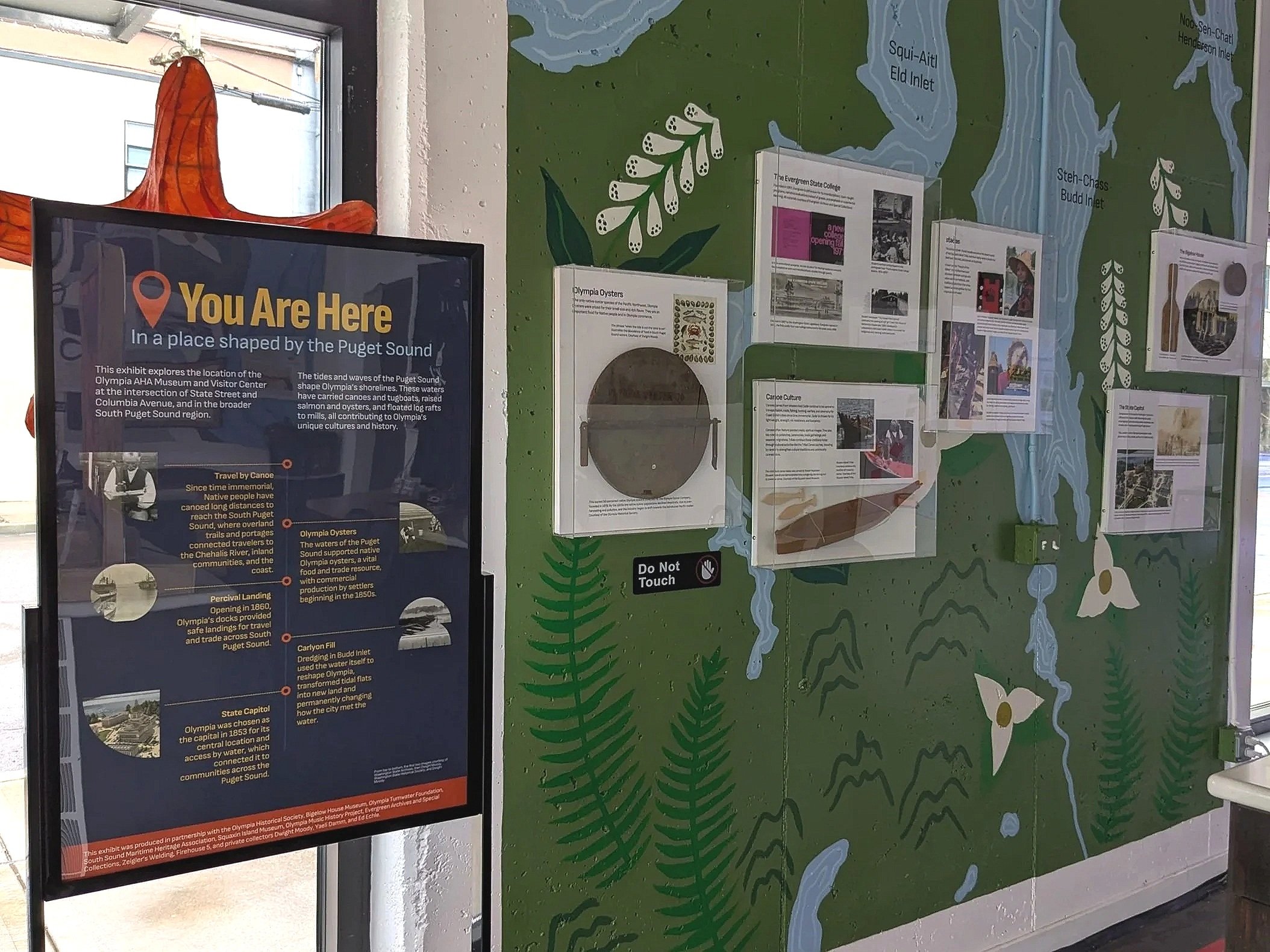
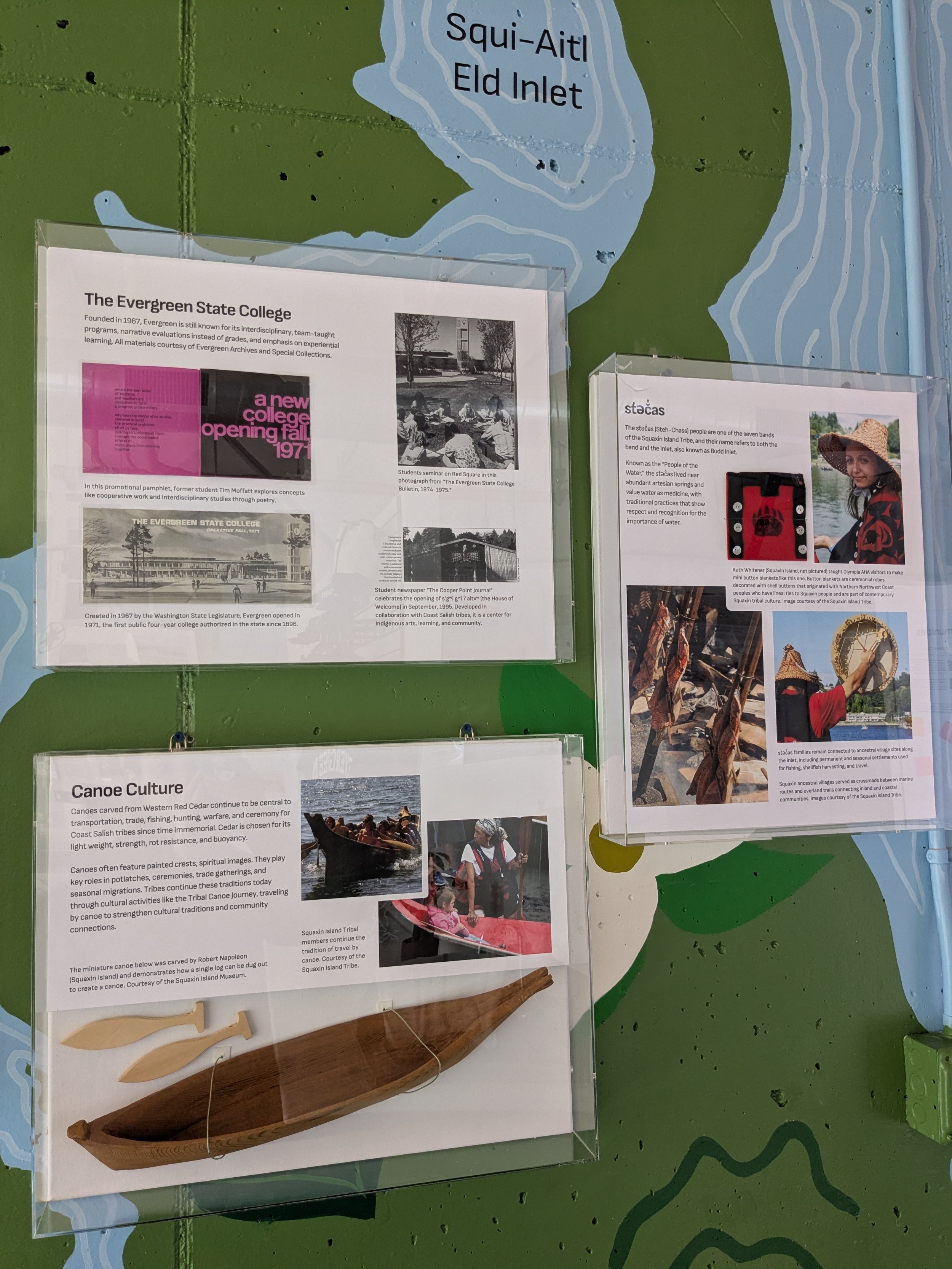
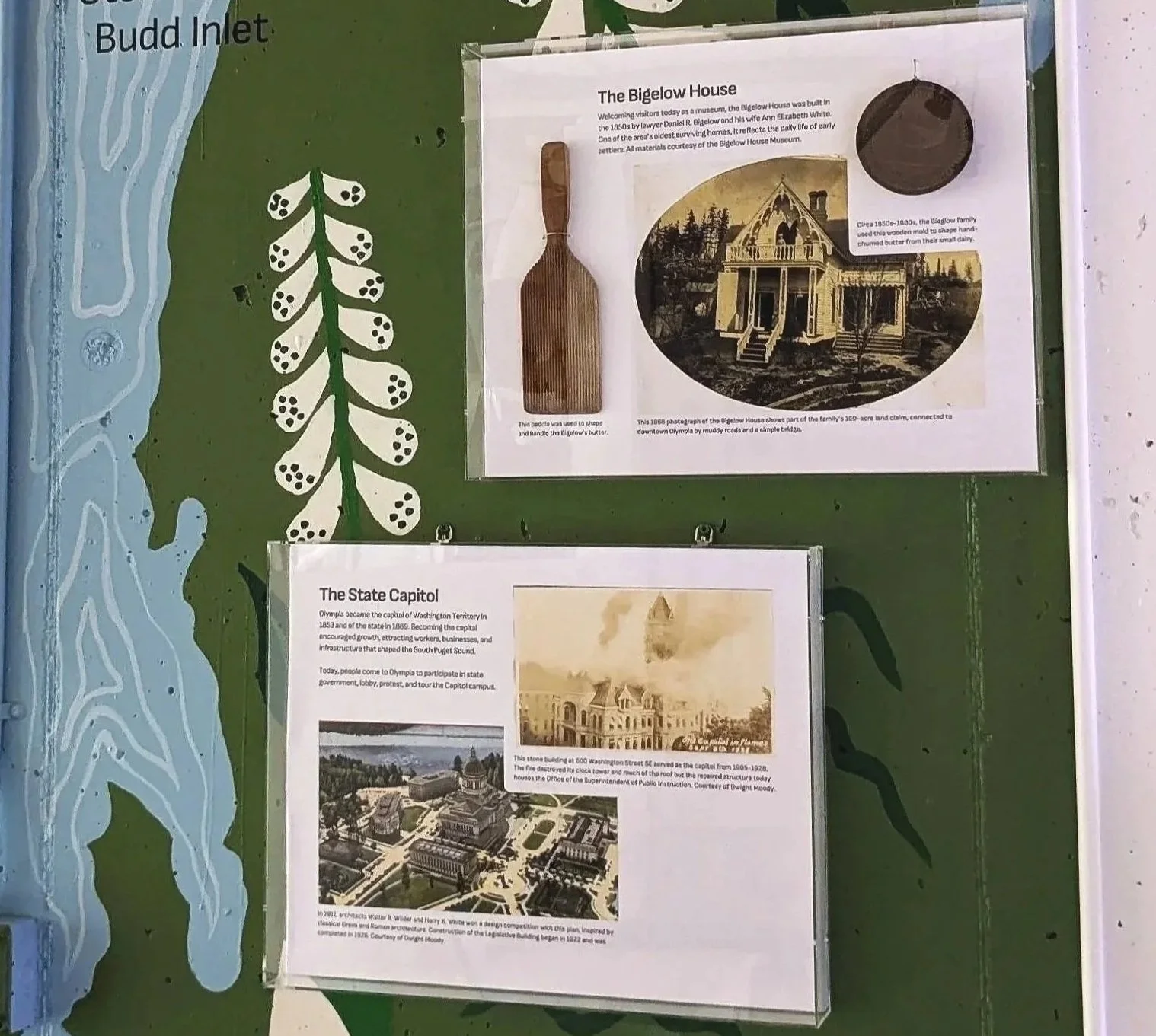
exhibit partners
This exhibit was produced in partnership with the Olympia Historical Society, Bigelow House Museum, Olympia Tumwater Foundation, South Sound Maritime Heritage Association, Squaxin Island Museum, Olympia Music History Project, Evergreen Archives and Special Collections, Zeigler’s Welding, Firehouse 5, and private collectors Dwight Moody, Yaeli Damm, and Ed Echle.