
“Power of Place”
In the North Gallery, explore a dynamic blend of past and present: works by seven regional artists are thoughtfully paired with a fascinating collection of historical postcards. Featured artists include Doyle Fanning, Kathy Gore Fuss, Mimi Williams, Sherry Buckner, Don Freas, Joe Seymour, and Tom Anderson. This exhibit was curated by Jonathan Happ, gallery director at Childhood’s End Gallery.
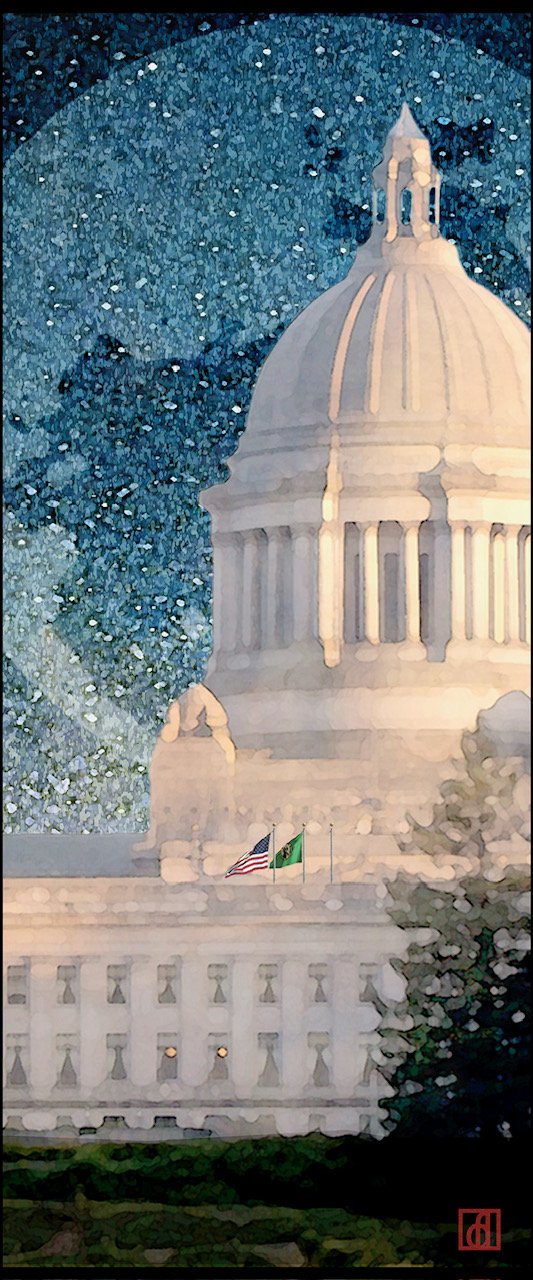
DOYLE FANNING
Artist Statement: I worked for 42 years in state and local government in 35 different jobs. During my years in Olympia, I served temporarily as both the State Fire Marshal and Pierce County Fire Marshal, and as the State Fish Chief, Deputy Director of the Department of Wildlife, Chief Financial Officer for Wildlife, Natural Recourses, and Ecology, and Project Director for the Renovation of the State Capitol following the Nisqually Earthquake. When I retired, I took my maiden name (Doyle) and my mother's maiden name (Fanning) and began working as a professional artist.
I've been active in Olympia as a founding member of the Olympia Film Society, the City Arts Commission, the Friends of Artesians, the Olympia Arts + Heritage Alliance, and served on the boards of the City Heritage Commission, Olympia Artspace Alliance, and The Community Foundation.
My first memory of making art is as a six-year-old in a polio rehabilitation hospital in Los Angeles. I made a finger painting. I still remember the joy of moving the paint around with my hands. Even as I worked professionally, I've always found time to do some kind of artwork. In the last twelve years, I've focused on print making using digital tools to alter photographs to create works inspired by traditional painting and print making media. I also paint and draw and cut and fold paper because I still love the tactile feel of making.
Capitol by Moonlight
Doyle Fanning
Photocollage
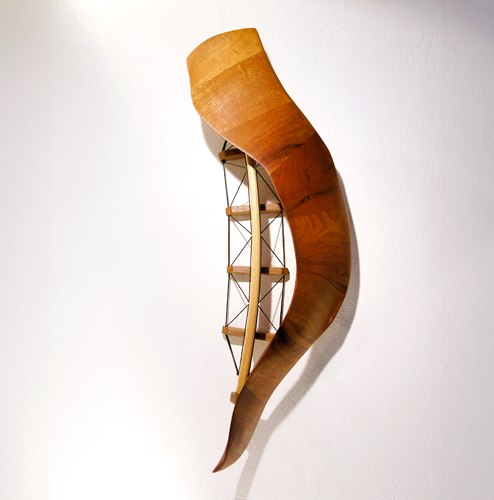
don freas
Don Freas is a sculptor, poet, and a designer/ craftsman of one-of-a-kind furniture. Raised in Ohio and Pennsylvania, he migrated in 1972 to the Pacific Northwest, where he lives and works along the shores of Puget Sound in Olympia, Washington. He holds an MFA in creative writing and literature from Bennington College and a BA in writing from Evergreen State College. His most recent book is IN BETWEEN, Creativity Set Free (from Lost Arts Design, 2023.) Don is also the author of SWALLOWING THE WORLD: New and Selected Poems (Lost Arts Design, 2015).
Artist Statement: We live to learn what life is and travel to find out where we're going. When we set aside ideas of where we want to go and keep our attention on where curiosity takes us, we wind up somewhere we couldn't have imagined in advance. Sometimes that's a great surprise, sometimes it's not, though with an open mind, there's always something to be learned.
The pieces in this exhibit trace four decades of such inward travel at the most fundamental levels of play and practice. These pieces are that inward journey, folded out, where it can be seen and considered. Look around. The track may become visible.
Understructure
Don Freas
Wood, Cord
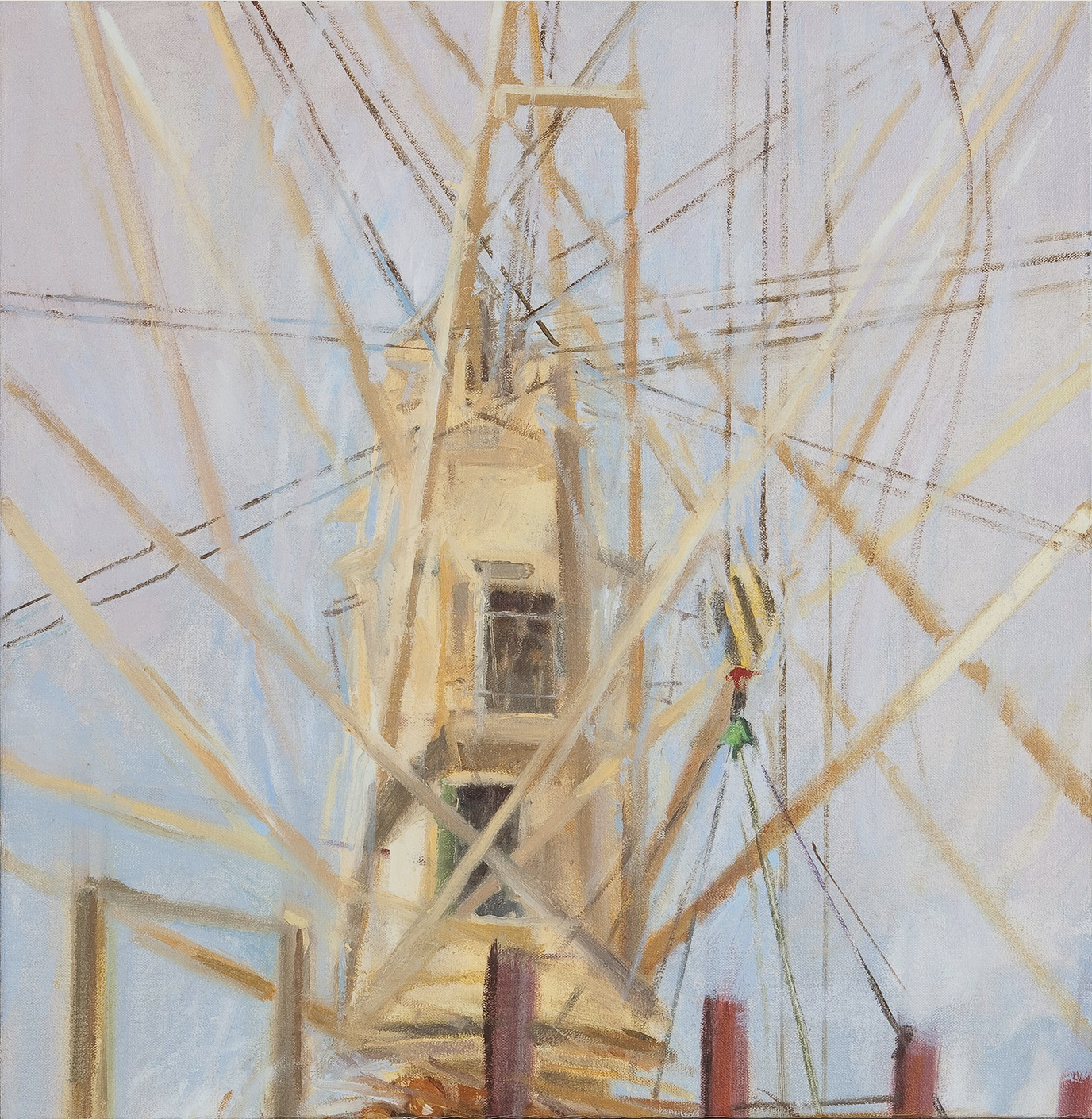
KATHY GORE-FUSS
Kathy Gore Fuss was born in Seattle (1955) but spent most of her childhood in the Mid-West (Kansas and Indiana). Her family returned to the Pacific Northwest in 1966 where she went on to complete high school, attend the University of Washington and graduate with a BFA in Drawing and Painting from the University of Washington. She has made Olympia, Washington her home since 1980. In 2004, her husband of 23 years died suddenly of a heart attack. The ten years following his death involved an arduous process of rebuilding which included, designing, and building a new studio (2010), shifting her practice to plein aire painting (2011) and organizing, fund raising and introducing her painting workshops and classes (2012). She was selected for the Jentel Artist-in-Residence program (2018) which gave her a much-needed break to explore, experiment and reflect. The 2020 pandemic brought more challenges for creating and exhibiting; this prompted her to shift once again with materials and content. She created an all-volunteer team with community members to help produce floral memorials to honor our community's need to pause, reflect and grieve our collective losses associated with COVID-19. The first of three installations were A Place to Mourn (May 2021) followed by a second piece A Place to Reflect (September 2021). Her third and largest piece, A Place to Pause is part of a group show Bloom at Childhood's End Gallery (June 2022).
Artist Statement: My art allows me to explore a variety of ideas that engage a process that doesn't dictate outcomes. Nature offers the ultimate freedom of expression for me. The tree does not judge, the wind does not evaluate, and the butterfly does not compete. We can form a complex integrated organism, and, through the act of making art, I try to capture some of that feeling, beauty and energy.
Crane Tower I
Kathy Gore-Fuss
Oil on canvas
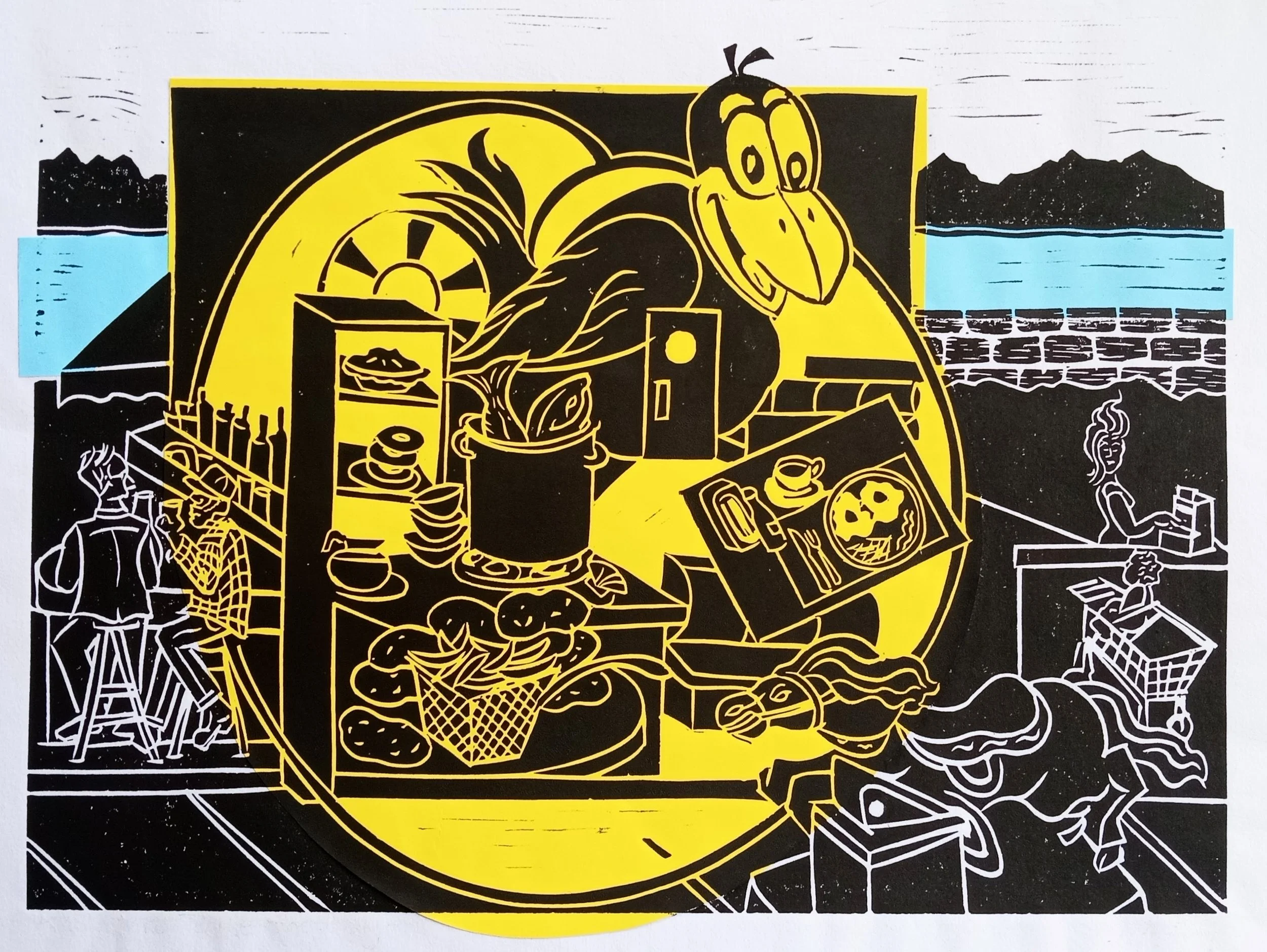
mimi williams
Artist Statement: My print work has become largely narrative in the last few years. The title of the linoleum block print serves as the opening sentence of the story. Initially my ideas are personal experiences, memories or stories that have been told to me, but as I draw the image, the idea starts to have a theme with a point of view much like a short story.
The art of creating a linoleum block print requires you to decide what will be the negative and positive spaces, and it is this process that gives nuance to the image. A few years ago I also started to use collage pieces in my prints. This gives the prints another dimension of mood and character.
Each print is made by hand and is unique. I carve the image in linoleum, then impress the inked carving onto the paper using the back of a wooden spoon. I use a variety of collage paper and apply a fixative to help prevent fading.
The Yard Bird at Sea Mart
Mimi Williams
Linoleum block print on Masa printmaking paper
Sherry Buckner
Sherry has been creating screen prints for the several years. Most recently she has added innovative processes to her medium along with hand painted elements to each print. Sherry teaches art in the elementary school classroom and has been a guest teacher and speaker in many educational communities in western Washington. Red Twig Studio and her home are located south of Tumwater, where she shares life with her husband, dogs, cats and the local wildlife.
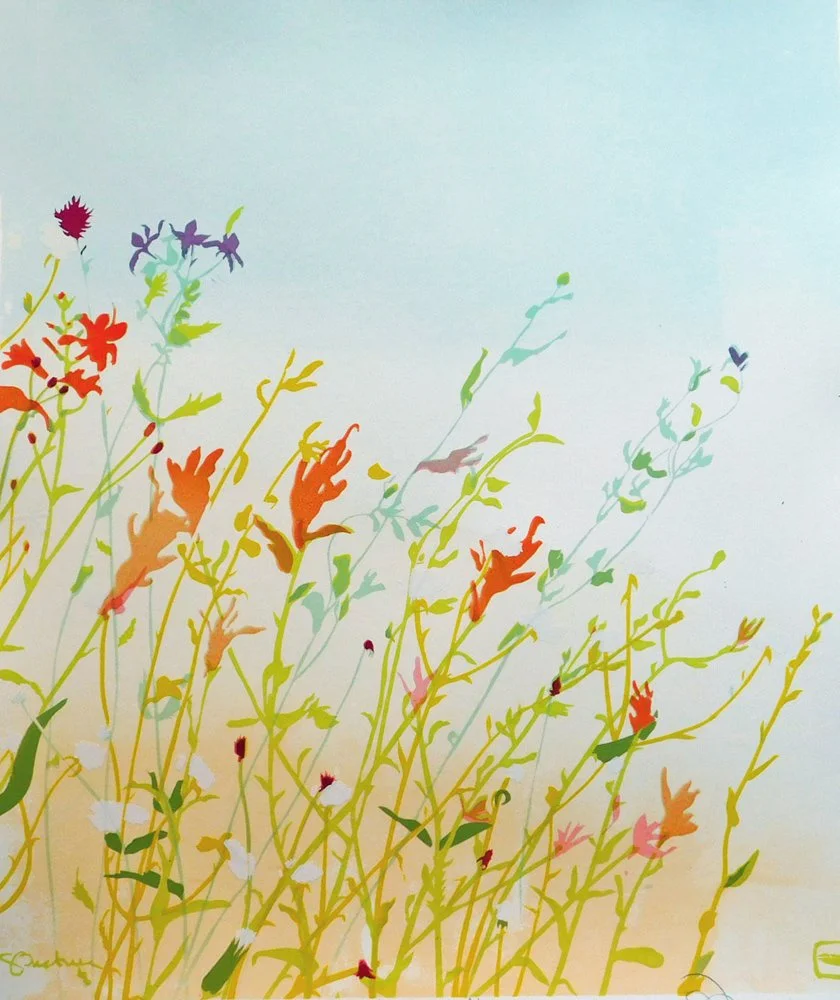
Artist Statement: Some of my images arise suddenly when I am least expecting them, in a flash as a picture seen internally. Those images come usually after some dreams and experiences about occurrences in my life – or when I am working with intensity to come into alignment with my oneself. Sometimes I am learning or embracing something that is coming to pass. I am usually creating clarity and insight and deeper awareness of my own feelings or perceptions. I would like to say that my images come close to a sacred awareness, but I am also a craft woman, I love to hone my skills as an artist. I love to embrace and feel calm oneness when I am drawing, because of an intimate knowledge of the subject, with its straight lines and curves and the motions of subtle angle changes. Gradations sing to me in a way that they feel heavenly or transcendent. Working with these nuances brings me into an accord with my own sense of beauty – profound or sensual – they bring me closer to the feeling of wonderment that I see each day in nature.
Mountain Wildflowers
Sherry Buckner
Original Screen Print
joe seymour
Joe (wahalatsuʔ) Seymour, Jr. is the son of Joe Sr. and Faye Seymour. Joe was born in Albuquerque, NM. He was formally trained as a commercial diver at the Diver’s Institute of Technology in Seattle, WA in 2002.
Joe’s ancestral name, wahalatsuʔ, was given to him by his family in 2003. wahalatsuʔ was the name of his great grandfather William Bagley.
Joe started his artistic career by carving his first paddle for the 2003 Tribal Journey to Tulalip. Also in 2003, he carved his first bentwood box. After the Tulalip journey, he then learned how to stretch and make drums.
Joe participated in the international gathering of Indigenous Artists, PIKO 2007, in Hawai’i. He also participated in the Te Tihi, 4th Gathering of Indigenous Visual Artists, in Rotorua, New Zealand, in 2010.
Artist Statement: In my career, I’ve worked with glass, photography, Salish wool weaving, prints, wood, and rawhide drums. I’ve been very fortunate to have a community of artists that I’m able to work with and who are very supportive of my career. If it were not for their caring and sharing of ideas, I would not be the artist that I am today. I hope that as I continue in my artistic career, I can pass on the teachings and nurturing spirit that have been shown to me.
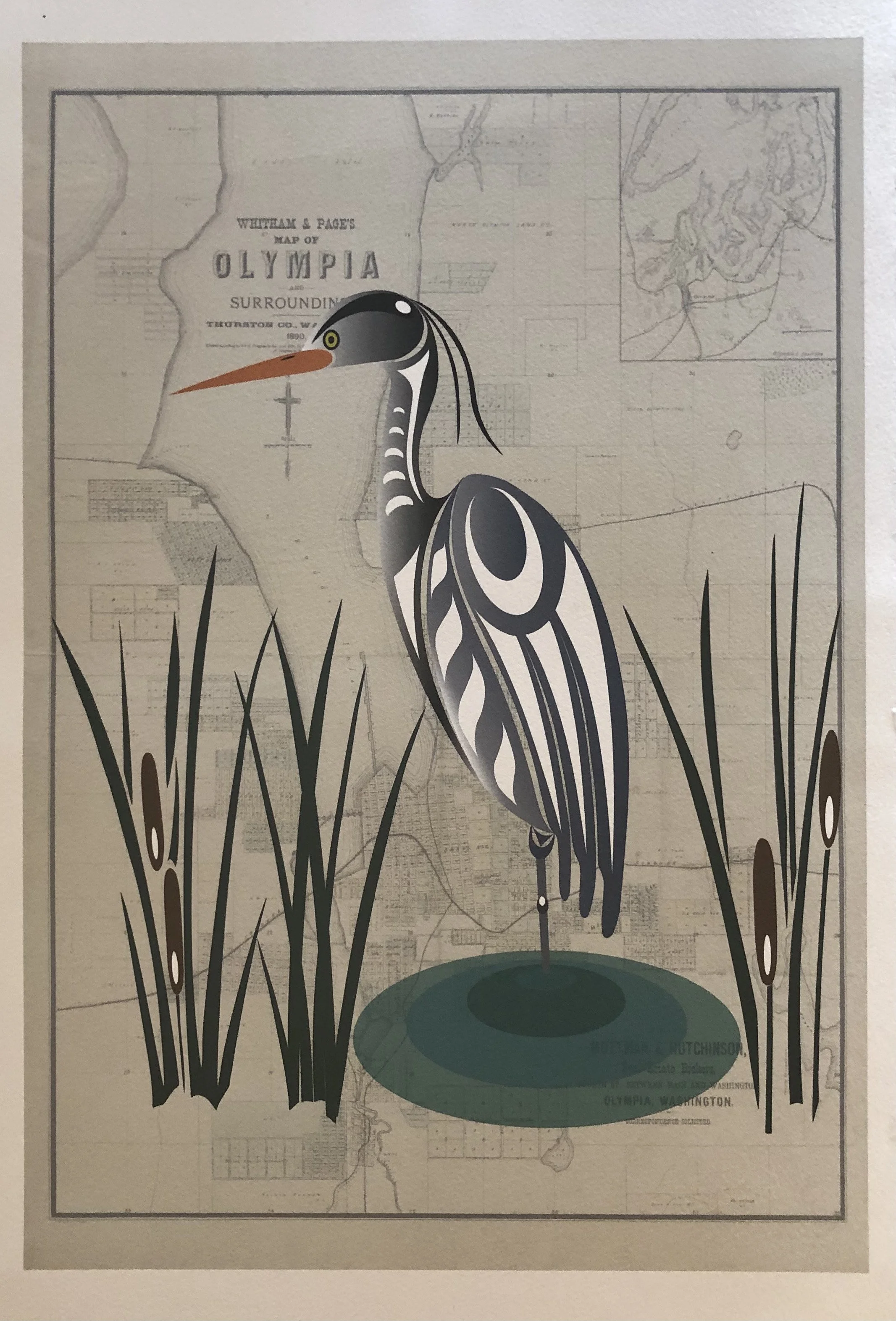
sbəq̓ʷaʔ
Joe Seymour
Giclée over historical map
tom anderson
Artist Statement: I am usually not thinking so much about a finished work, but am inspired, accepting and mystified by the process of creating it. I see each of my works as a rehearsal in enduring uncertainty. I strive to be deliberate in my approach, although I am fascinated by re-creating a condition where I am out of my depth, uncertain, no longer feeling in control, yet generating something. Creating an atmosphere that encourages risk and stepping outside the comfort zone of what I think I know and enter those uncertain realms of what I am about to discover, and to use those discoveries as a basis for perception and action.
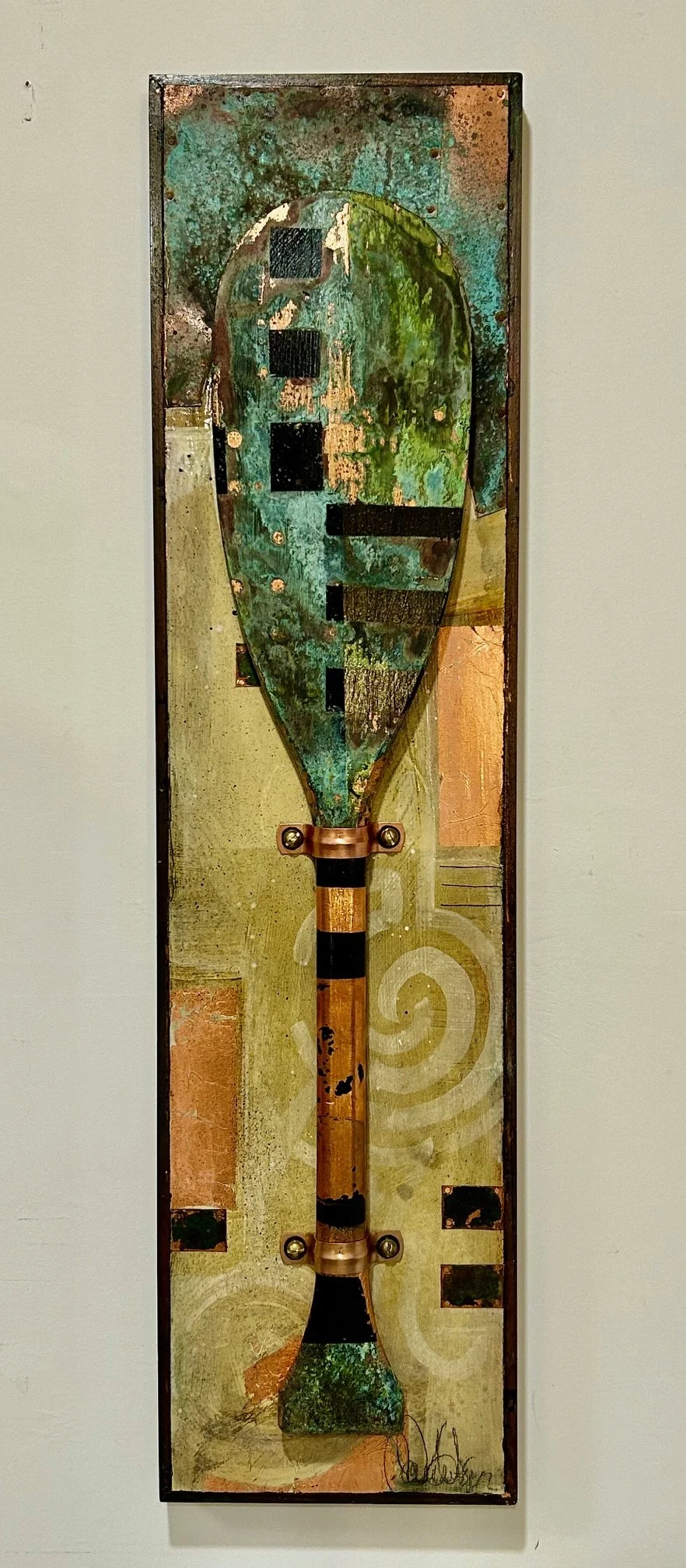
The materials I use are often found or recycled metals, i.e. copper, aluminum, steel or brass. The application of specific chemical formulas and patinas create a variety of color and texture, which become my "canvas" for the addition of other elements i.e. gold leaf, pastel, graphite, and varnishes. Images, shapes, and colors are often spontaneous events as I am influenced by the relationship of these materials to each other--the union of opposites.
All the elements combined, physically as well as metaphorically, are among the tools I use to continually re-invent and express the dynamics of my own life, as well as to hopefully reflect to the viewer the dynamics and emotion of their own spirit.
The rest is trusting my intuition, having faith in the possibilities, and a knowingness of when to quit.
Watertool #23
Tom Anderson
Mixed Media