
“Remembering Exclusion, Honoring Community: Chinese Life in Olympia”
February 27 — April 11, 2026
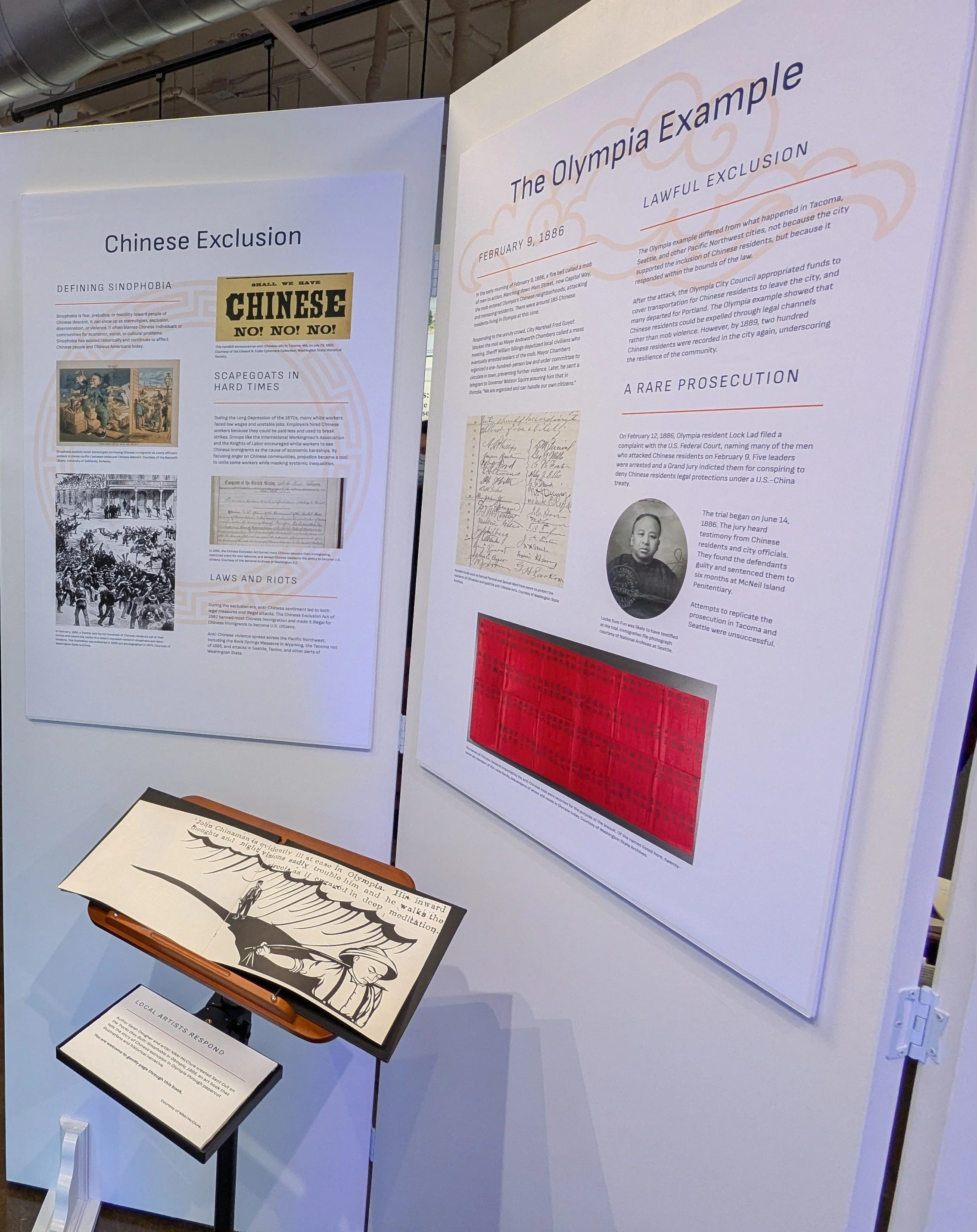
Each February marks the anniversary of Olympia’s Chinese exclusion event and reminds us of the broader season of anti-Chinese organizing that intensified across the Pacific Northwest in 1885-1886. This wave of actions began in the fall of 1885 with the violent removal of Chinese residents in Tacoma, and continued through the winter, including violent unrest in Seattle in February.
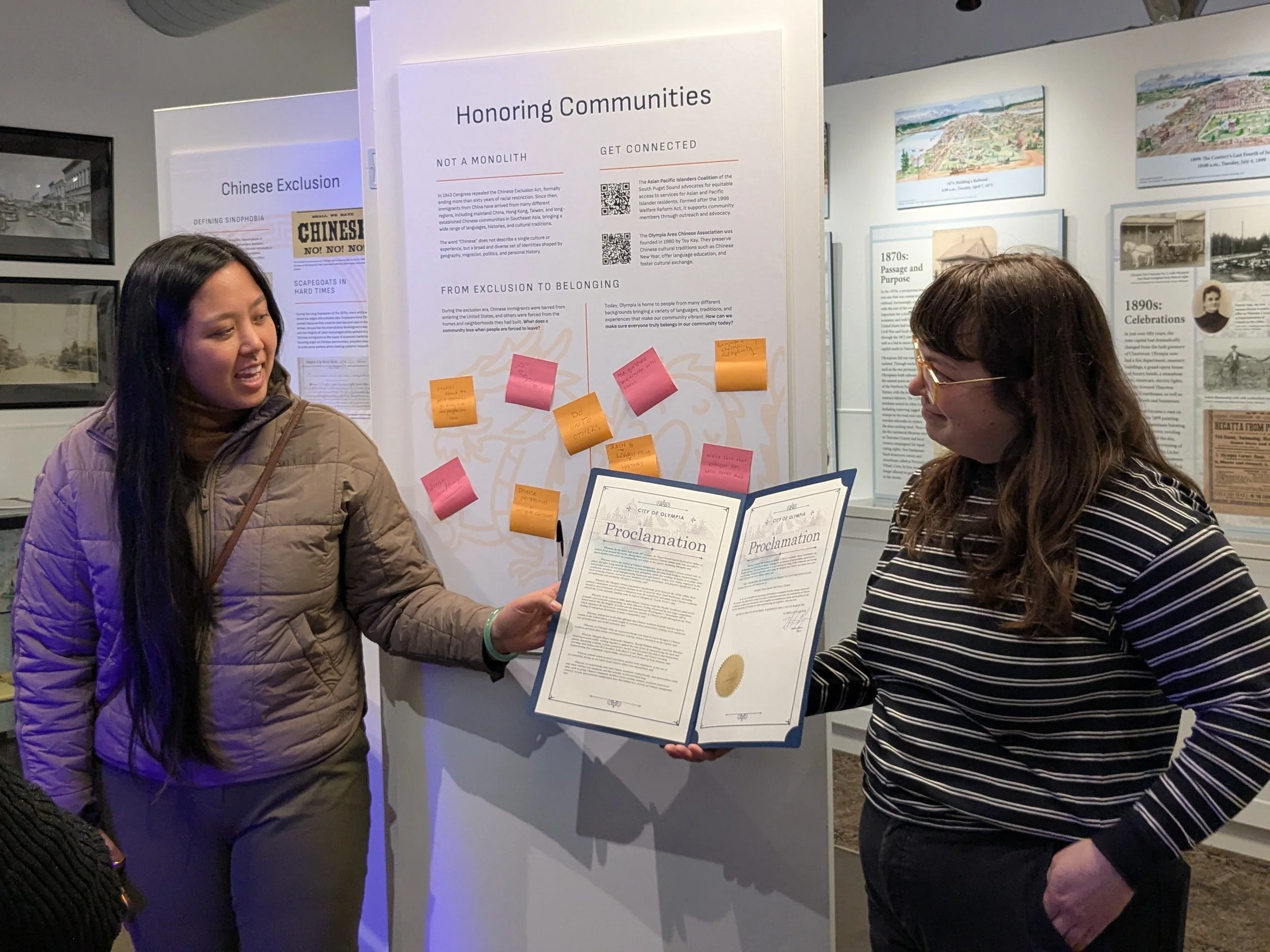
Returning to these events year after year allows us to reflect on our shared histories, both of exclusion and of resilience. Today, questions about who belongs in our national identity are deeply debated. Remembering the era of Chinese exclusion can help us think about how we want to live and act in Olympia today.
This season also coincides with Lunar New Year, a time of celebration across many Asian cultures. In the present day, communities gather to mark the occasion with firecrackers, lion dances, family meals, and shared traditions.
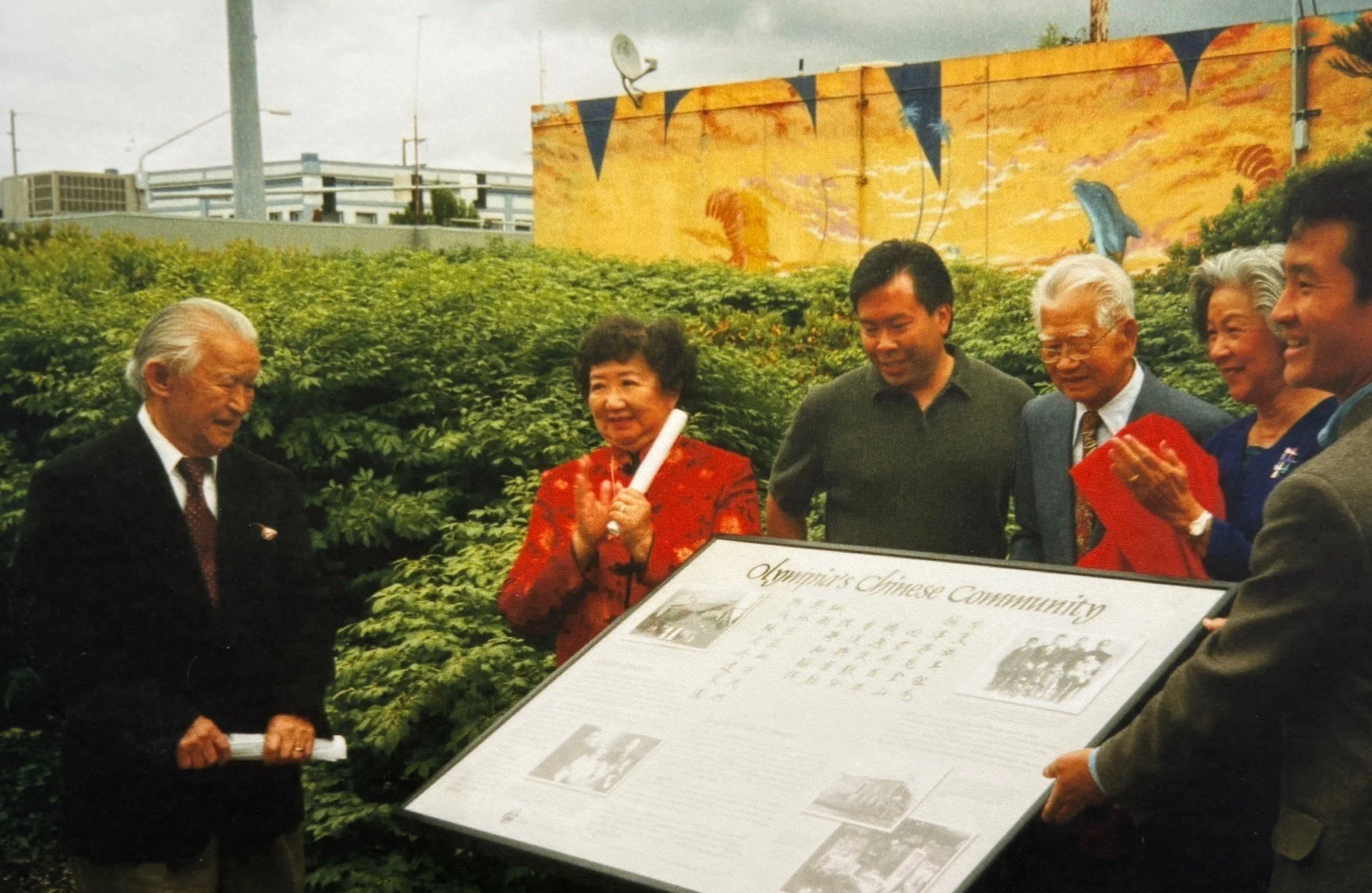
The exclusion event fractured and scattered Olympia’s early Chinese community, leaving few direct descendants in the city today. We honor the Chinese and Chinese American communities who live here now, whose presence reminds us that history is marked both by loss and by renewal.
Recovering Difficult Histories
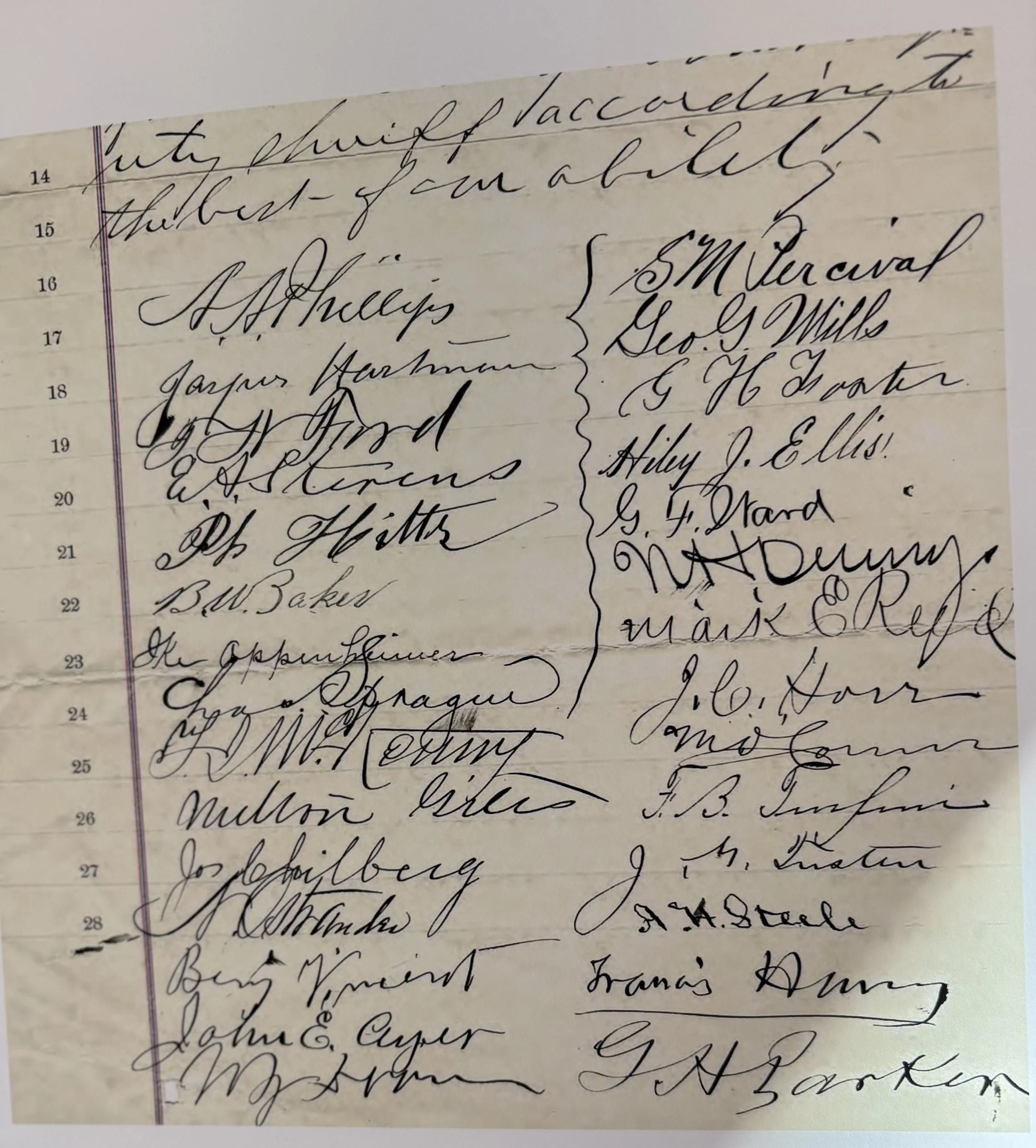
Telling these stories is not simple. For much of the past, historical institutions did not collect materials from local Chinese communities or prioritize their histories. Language barriers also shaped the historical record: Chinese names were often recorded inconsistently or anglicized without a standard system, making it difficult to trace individuals across time.
At the same time, Chinese communities preserved their own histories through family memory, cultural traditions, and community networks. This exhibit recognizes the difficulty of recovering stories that have been marginalized and honors the knowledge that has endured despite institutional neglect.
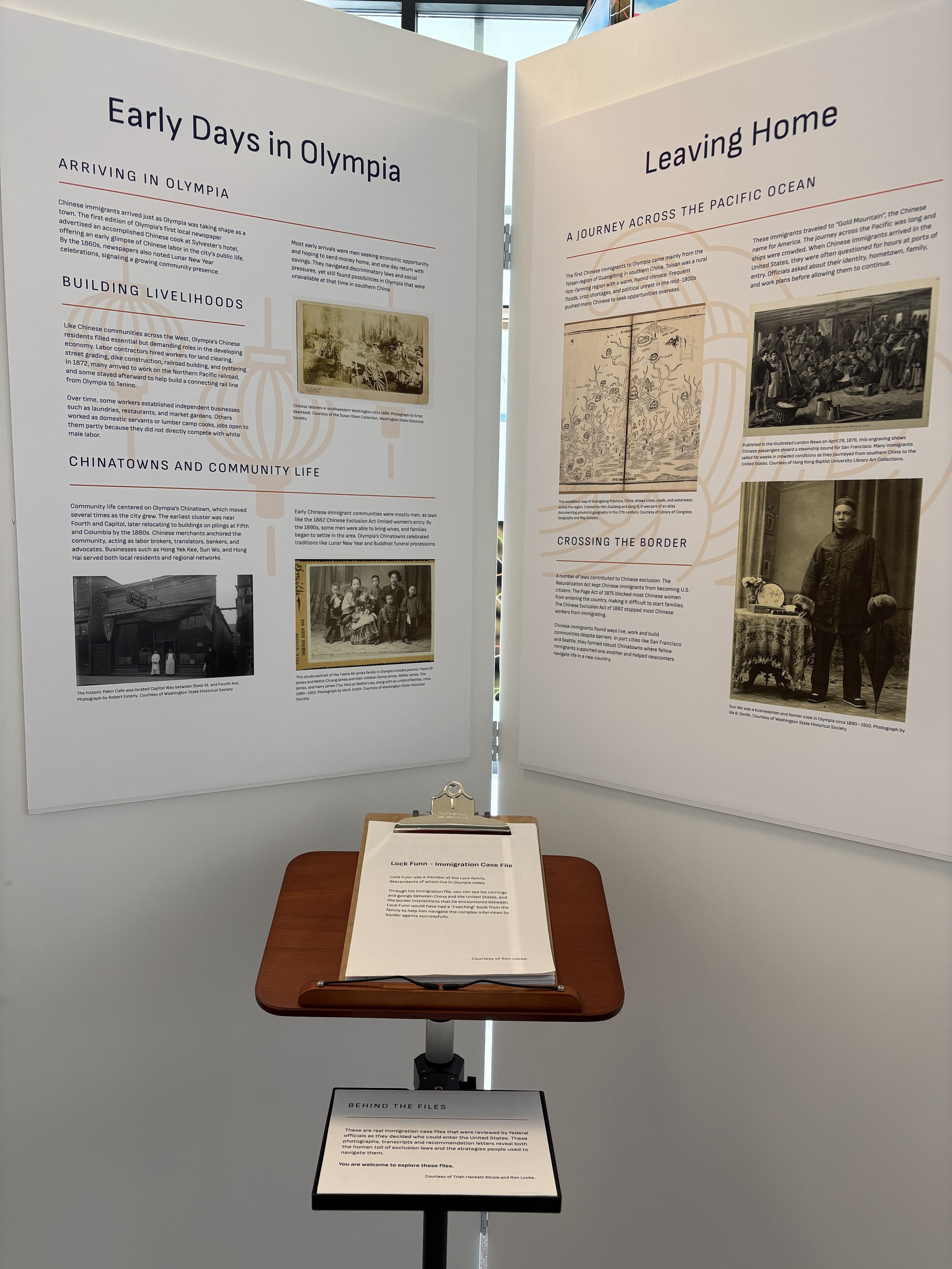
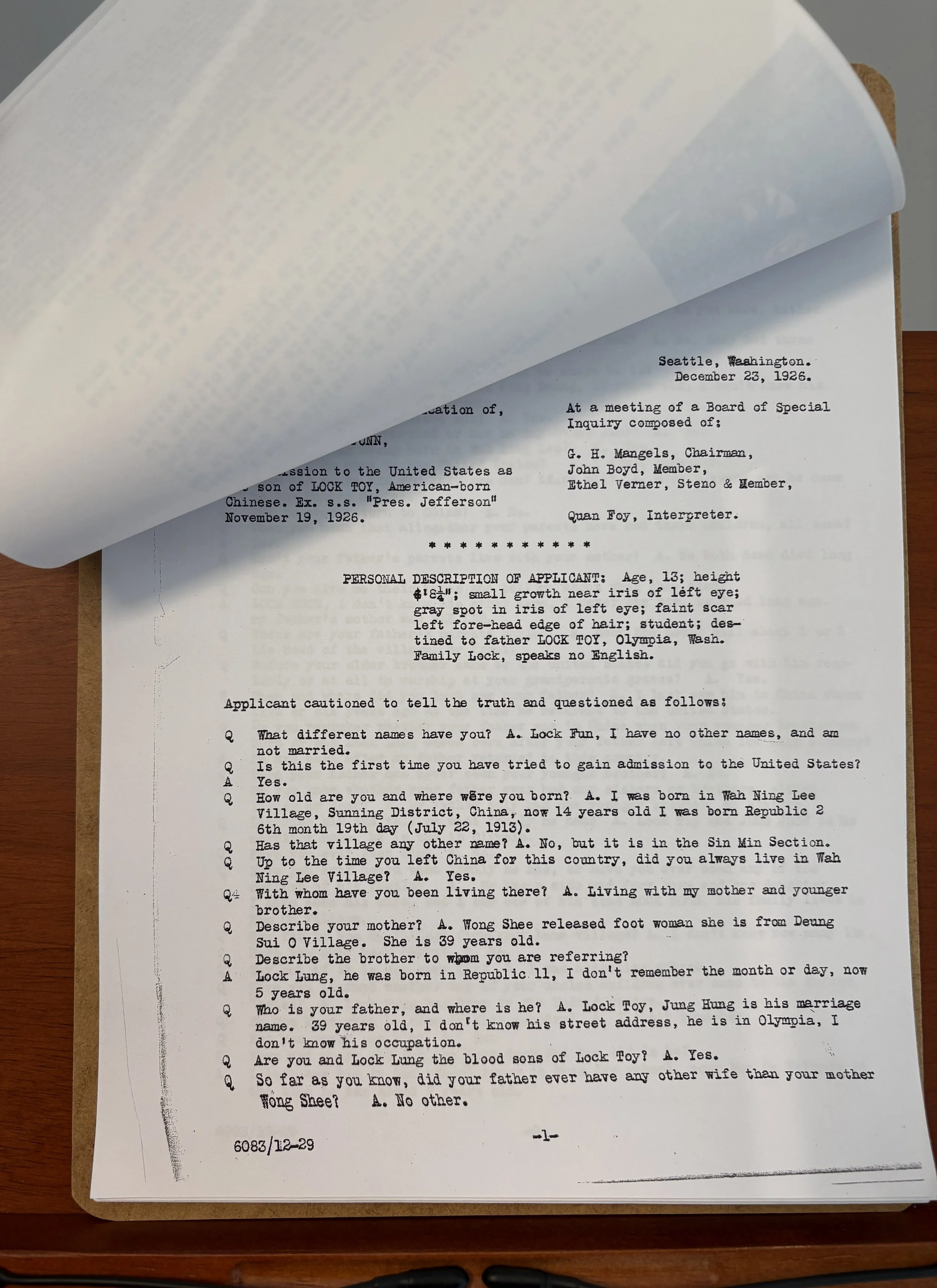
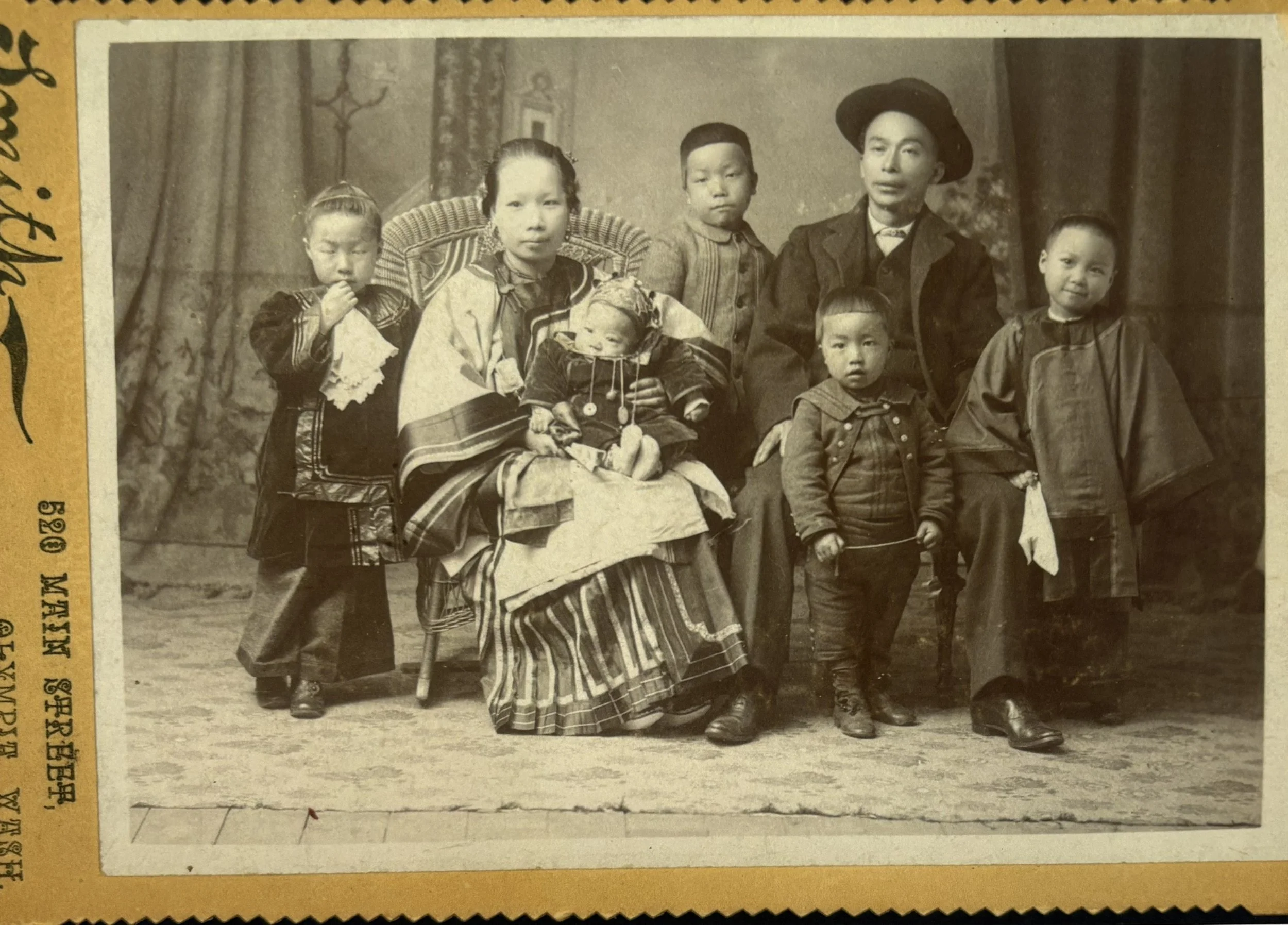
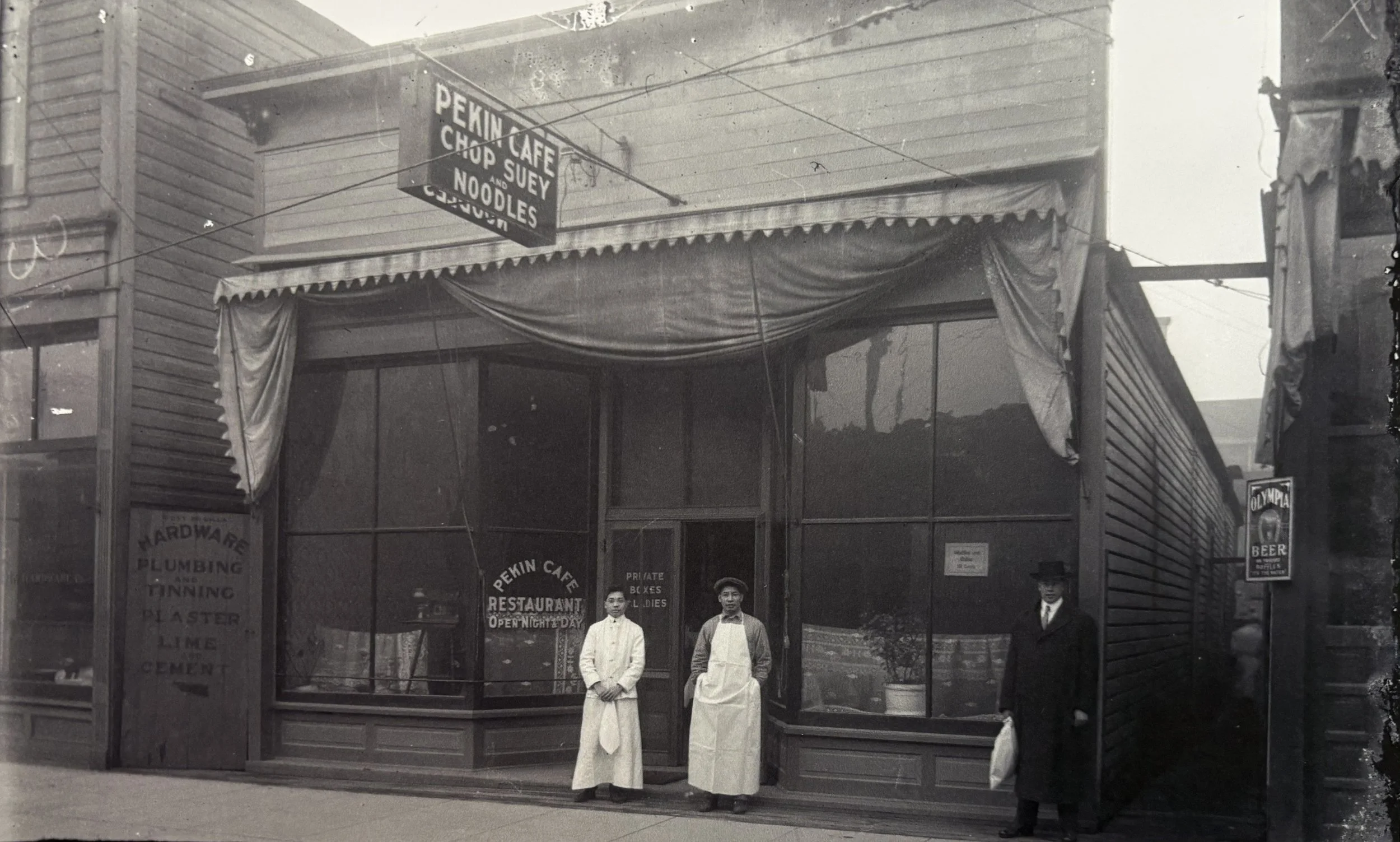
Leaving Home
A Journey Across the Pacific Ocean
The first Chinese immigrants to Olympia came mainly from the Toisan region of Guangdong in southern China. Toisan was a rural rice-farming region with a warm, humid climate. Frequent floods, crop shortages, and political unrest in the mid-1800s pushed many young men to seek opportunities overseas.
These immigrants traveled to “Gold Mountain”, the Chinese name for America. The journey across the Pacific was long and ships were crowded. Many first arrived in California during the gold rush, hoping to earn money to send home. They encountered opportunities as well as discrimination, including complex immigration rules.
The Naturalization Act kept Chinese immigrants from becoming U.S. citizens. The Page Act of 1875 blocked most Chinese women from entering the country, making it difficult to start families. The Chinese Exclusion Act of 1882 stopped most Chinese workers from immigrating and prevented Chinese residents from becoming citizens.
Even when immigrants were allowed to enter the United States, they faced widespread racism. White workers often feared competition for jobs, and neighbors sometimes discriminated against them in daily life. Living, working, and building communities was extremely difficult, but Chinese immigrants found ways to persevere. In port cities like San Francisco and Seattle, they were able to form Chinatowns—neighborhoods where fellow immigrants supported one another and helped newcomers navigate life in a new country.
Early Days in Olympia
Arriving in Olympia
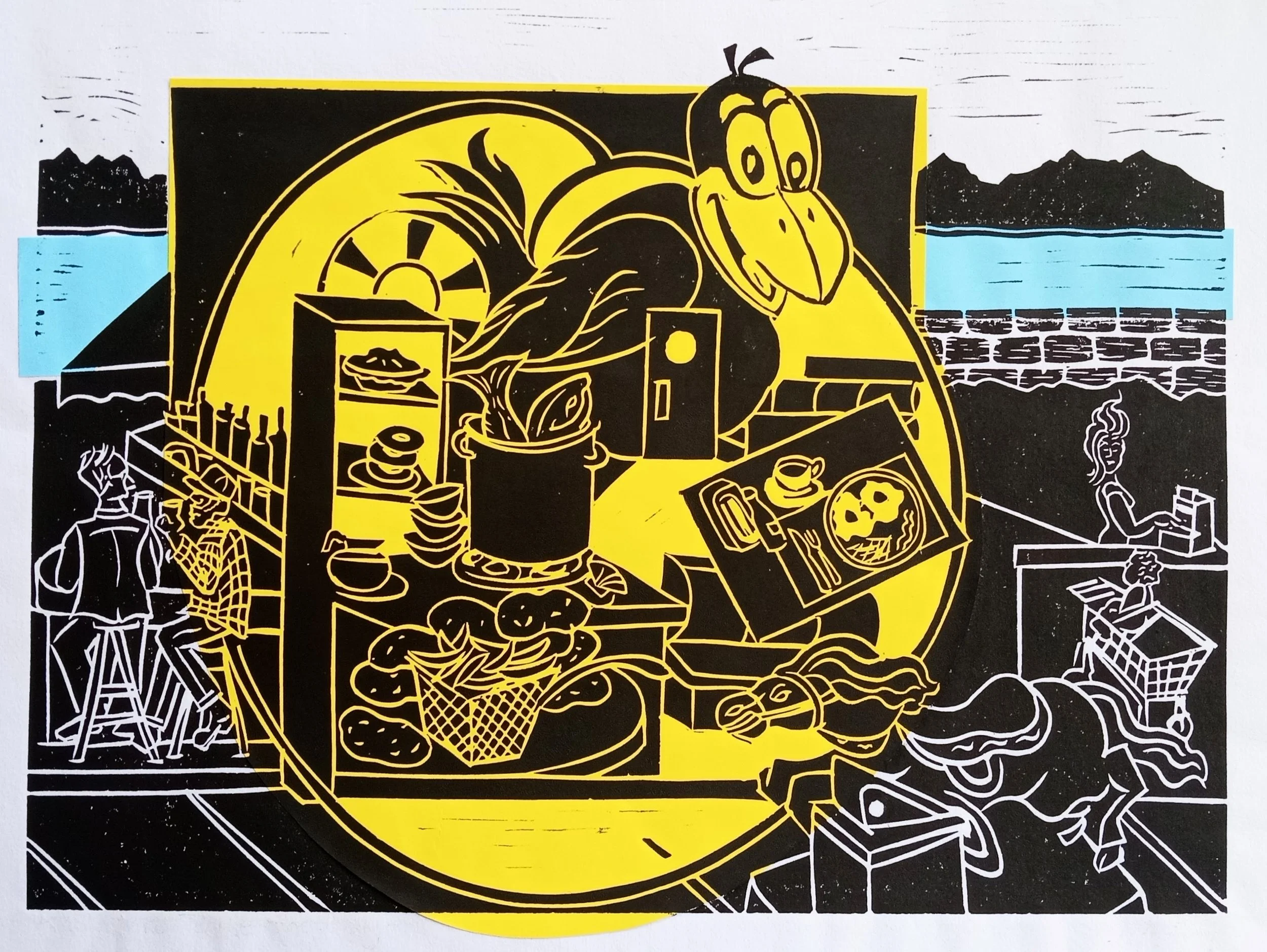
mimi williams
Artist Statement: My print work has become largely narrative in the last few years. The title of the linoleum block print serves as the opening sentence of the story. Initially my ideas are personal experiences, memories or stories that have been told to me, but as I draw the image, the idea starts to have a theme with a point of view much like a short story.
The art of creating a linoleum block print requires you to decide what will be the negative and positive spaces, and it is this process that gives nuance to the image. A few years ago I also started to use collage pieces in my prints. This gives the prints another dimension of mood and character.
Each print is made by hand and is unique. I carve the image in linoleum, then impress the inked carving onto the paper using the back of a wooden spoon. I use a variety of collage paper and apply a fixative to help prevent fading.
The Yard Bird at Sea Mart
Mimi Williams
Linoleum block print on Masa printmaking paper
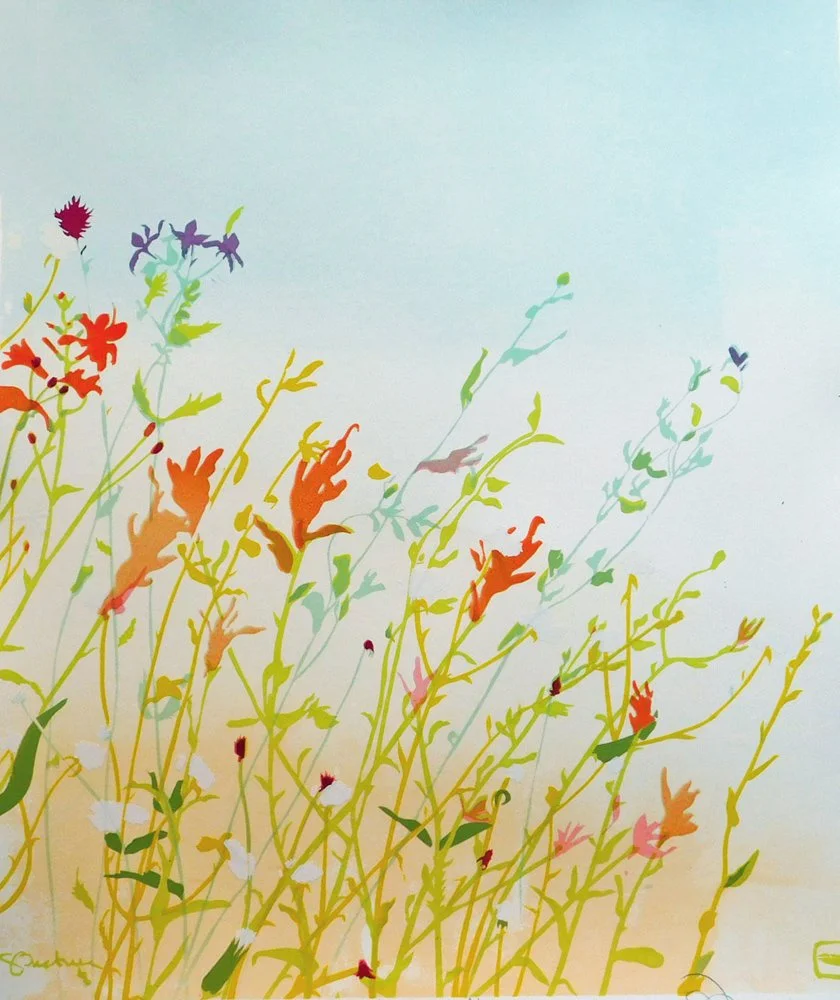
Sherry Buckner
Sherry has been creating screen prints for the several years. Most recently she has added innovative processes to her medium along with hand painted elements to each print. Sherry teaches art in the elementary school classroom and has been a guest teacher and speaker in many educational communities in western Washington. Red Twig Studio and her home are located south of Tumwater, where she shares life with her husband, dogs, cats and the local wildlife.
Artist Statement: Some of my images arise suddenly when I am least expecting them, in a flash as a picture seen internally. Those images come usually after some dreams and experiences about occurrences in my life – or when I am working with intensity to come into alignment with my oneself. Sometimes I am learning or embracing something that is coming to pass. I am usually creating clarity and insight and deeper awareness of my own feelings or perceptions. I would like to say that my images come close to a sacred awareness, but I am also a craft woman, I love to hone my skills as an artist. I love to embrace and feel calm oneness when I am drawing, because of an intimate knowledge of the subject, with its straight lines and curves and the motions of subtle angle changes. Gradations sing to me in a way that they feel heavenly or transcendent. Working with these nuances brings me into an accord with my own sense of beauty – profound or sensual – they bring me closer to the feeling of wonderment that I see each day in nature.
Mountain Wildflowers
Sherry Buckner
Original Screen Print
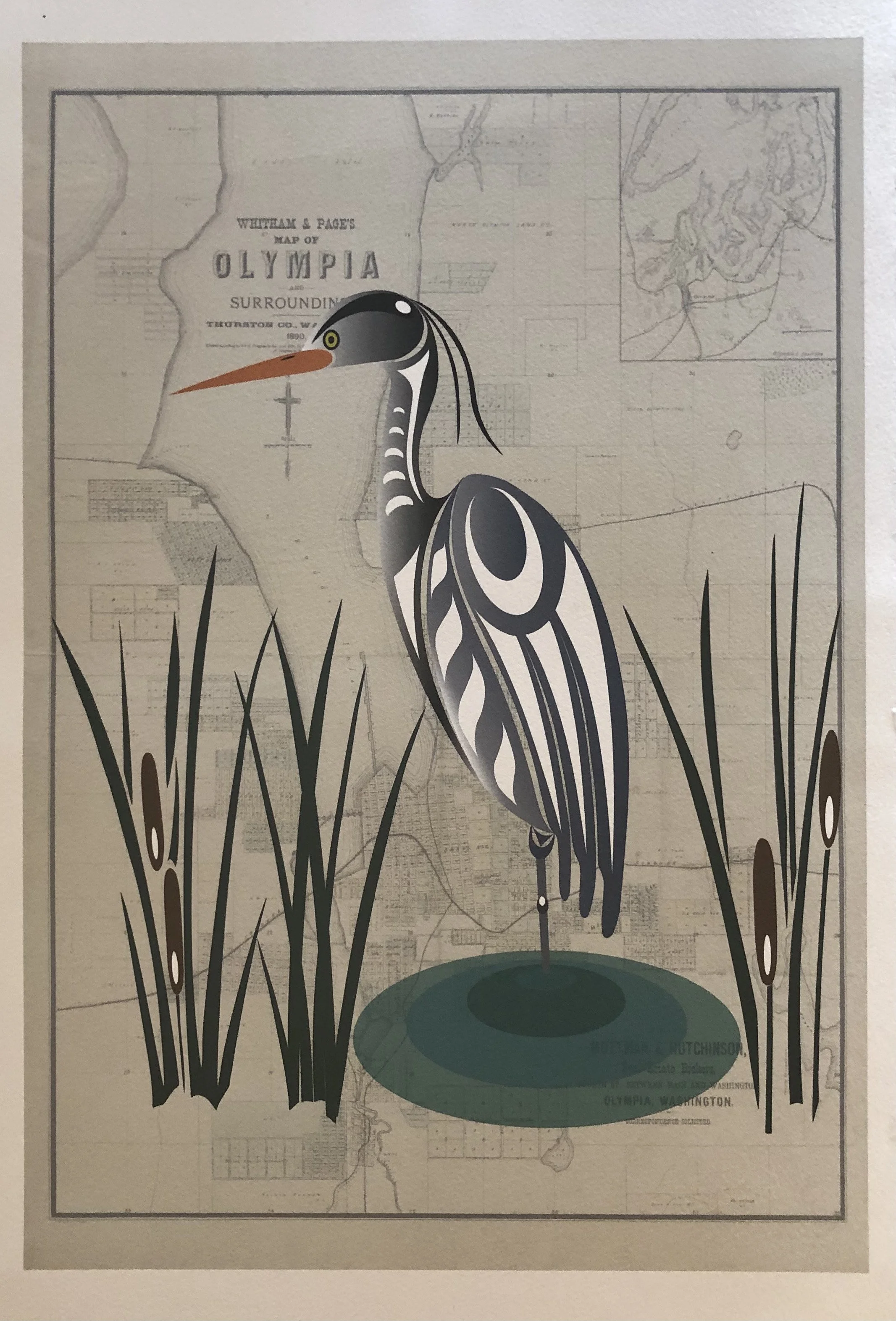
joe seymour
Joe (wahalatsuʔ) Seymour, Jr. is the son of Joe Sr. and Faye Seymour. Joe was born in Albuquerque, NM. He was formally trained as a commercial diver at the Diver’s Institute of Technology in Seattle, WA in 2002.
Joe’s ancestral name, wahalatsuʔ, was given to him by his family in 2003. wahalatsuʔ was the name of his great grandfather William Bagley.
Joe started his artistic career by carving his first paddle for the 2003 Tribal Journey to Tulalip. Also in 2003, he carved his first bentwood box. After the Tulalip journey, he then learned how to stretch and make drums.
Joe participated in the international gathering of Indigenous Artists, PIKO 2007, in Hawai’i. He also participated in the Te Tihi, 4th Gathering of Indigenous Visual Artists, in Rotorua, New Zealand, in 2010.
Artist Statement: In my career, I’ve worked with glass, photography, Salish wool weaving, prints, wood, and rawhide drums. I’ve been very fortunate to have a community of artists that I’m able to work with and who are very supportive of my career. If it were not for their caring and sharing of ideas, I would not be the artist that I am today. I hope that as I continue in my artistic career, I can pass on the teachings and nurturing spirit that have been shown to me.
sbəq̓ʷaʔ
Joe Seymour
Giclée over historical map
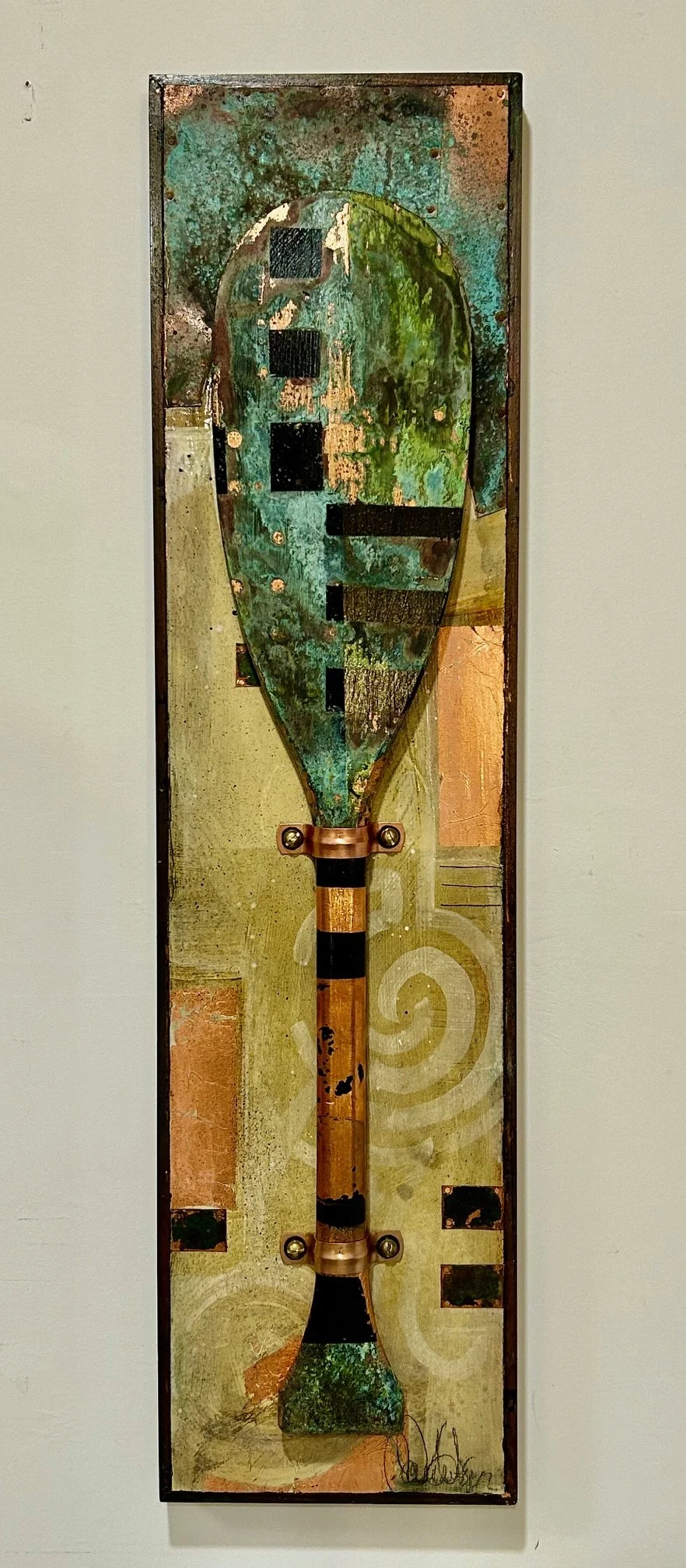
tom anderson
Artist Statement: I am usually not thinking so much about a finished work, but am inspired, accepting and mystified by the process of creating it. I see each of my works as a rehearsal in enduring uncertainty. I strive to be deliberate in my approach, although I am fascinated by re-creating a condition where I am out of my depth, uncertain, no longer feeling in control, yet generating something. Creating an atmosphere that encourages risk and stepping outside the comfort zone of what I think I know and enter those uncertain realms of what I am about to discover, and to use those discoveries as a basis for perception and action.
The materials I use are often found or recycled metals, i.e. copper, aluminum, steel or brass. The application of specific chemical formulas and patinas create a variety of color and texture, which become my "canvas" for the addition of other elements i.e. gold leaf, pastel, graphite, and varnishes. Images, shapes, and colors are often spontaneous events as I am influenced by the relationship of these materials to each other--the union of opposites.
All the elements combined, physically as well as metaphorically, are among the tools I use to continually re-invent and express the dynamics of my own life, as well as to hopefully reflect to the viewer the dynamics and emotion of their own spirit.
The rest is trusting my intuition, having faith in the possibilities, and a knowingness of when to quit.
Watertool #23
Tom Anderson
Mixed Media
test